BPS 2023
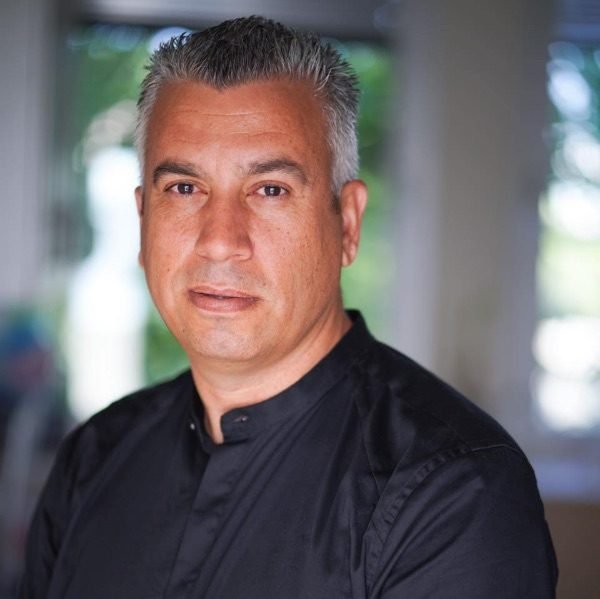
Modulating the Ubiquitin System with Cyclic Peptides: Chemistry and Biology
Ashraf Brik
Professor, Technion-Israel Institue of Technology
ABSTRACT
The ubiquitin (Ub) signal plays crucial roles in various cellular activities such as cell cycle regulation, DNA damage repair, signal transduction, neural development and transcription. It is therefore not surprising that there is a great interest in targeting various components involved in the Ub pathway such as deubiquitinating enzymes (DUBs) and the 26S proteasome with the aim of producing novel drugs against several diseases. For nearly a decade my laboratory has been interested in developing chemical tools to assist in understanding Ub signaling in great details, allowing also for the development of novel modulators for its components. In particular, we have been interested in developing assays, activity-based probes and inhibitors for DUBs. In this talk, I will describe our efforts in applying the Random Non-Standard Peptides Integrated Discovery method (RaPID), developed by the Suga laboratory, to discover novel cyclic peptides that specifically bind Lys48-linked or Lys63 linked Ub chains. The discovered cyclic peptides were found to protected Lys48-linked Ub chains from DUBs activity and prevented proteasomal degradation of Ub-tagged proteins. We also found that these cyclic peptides could enter cells, inhibit growth and induce programmed cell death. Finally, these cyclic peptides were also active in an animal model, therefore opening new opportunities for therapeutic intervention. On the other hand, the cyclic peptides that modulate Lys63-linked Ub chains were found to interfere with the DNA repair mechanism. Finally, I will present our recent efforts for the development of new methods of peptide cyclization using Gold(I) chemistry.
1. Mickal Nawatha, Joseph Rogers, Steven M. Bonn, Ido Livneh, Betsegaw Lemma,Sachitanand M. Mali, Ganga B. Vamisetti, Hao Sun, Beatrice Bercovich, Yichao Huang, Aaron Ciechanover, David Fushman, Hiroaki Suga and Ashraf Brik, De novo macrocyclic peptides that specifically modulate Lys48-linked ubiquitin chains, Nature Chemistry, 2019, 11, 644.
2. Yichao Huang, Mickal Nawatha, Ido Livneh, Joseph M. Rogers, Hao Sun, Sumeet K. Singh, Aaron Ciechanover, Ashraf Brik, Hiroaki Suga, Nawatha, Affinity Maturation of Macrocyclic Peptide Modulators of Lys48 – linked Diubiquitin by a Twofold Strategy, Chemistry A European Journal, 2020, 26, 8022.
3. Joseph M. Rogers, Mickal Nawatha, Betsegaw Lemma, Ganga B. Vamisetti, Ido Livneh, Uri Barash, Israel Vlodavsky, Aaron Ciechanover, David Fushman, Hiroaki Suga, Ashraf Brik, In vivo m
BIO
Ashraf Brik, PhD, Professor of Chemistry
Affiliation:
Schulich Faculty of Chemistry
Technion-Israel Institute of Technology
Research Interests:
1) Chemical and semisynthesis of posttranslationally modified proteins. 2) Studying the ubiquitin and ubiquitin like modifier signals. 3) Developing assays, activity-based probes and novel inhibitors for deubiquitinases.
Education: 1996: B.Sc. Ben-Gurion University of the Negev; 1998: M.Sc. Technion-Israel Institute of Technology; 2001: Ph.D. Technion-Israel Institute of Technology.
Professional Career:
Since 2/2015 Full Professor, Schulich Faculty of Chemistry, Technion
3/2012-2/2015 Full Professor, Department of Chemistry, Ben-Gurion University. 4/2011-2/2012 Associate Professor, Department of Chemistry, Ben-Gurion University. 2/2007-3/2011 Sr. Lecturer, Department of Chemistry, Ben-Gurion University.
Scientific Activities:
2009-2014 Elected member of the executive board of the Israel Chemical Society.
2012-present Member of the Editorial Board of Organic and Biomolecular Chemistry.
2012-present Member of the International Advisory Board of Asian Journal of Organic Chemistry.
Honors:
Bessel Award of the Humboldt Foundation for 2015, The 11th Hirata Award, Teva Award for Excellence in memory of Eli Hurvitz for 2013, The Tetrahedron Young Investigator Award in Bioorganic and Medicinal Chemistry for 2013, The 2011 Israel Chemical Society prize for Outstanding Young Chemist.